Showing posts with label contemplative prayer. Show all posts

Review: Mike Bickle on Contemplative Prayer (part 2)

(Click HERE TO read Part 1)
 
"Contemplative prayer is an imperfect science." So says Mike Bickle, one of the Kansas City Prophets and a proponent of introducing Christians to what he refers to as, "CP" (contemplative prayer). Bickle has the following to say of contemplative prayer:


“… this is an imperfect science… it (the term CP) is not a term that is a biblical term… it’s an idea.  … there’s no place where Paul the apostle said the term CP means this… different ones throughout church history define it differently… I have 30, 40, 50 titles on CP in my home… any book on CP, I just buy 'em… at first it confused me because one person talked about it so different from another person, it took me a few of years to figure it out that there is no clear infallible definition…” --Mike Bickle in his audio message “Contemplative Prayer part 2”

Analysis of what Bickle said in the above quotes:
  • CP is an evolving thing
  • Contemplative prayer cannot be found in the Bible
  • To one it means one thing. To another, it means something else
  • He will read anything on CP, regardless of who writes it
  • CP cannot be defined (This, as we will show, is not true)
The following is another Bickle recommendation on pursuing CP: “You’re gonna need resources to do it (to go into the deep waters of God). The Protestant world is really, really, narrow on the resources of contemplative prayer.”

   Editor comment: There is a reason the Protestant world is really narrow on resources of contemplative prayer. It is not found in the Bible!

    During the protestant reformation, people rightly claimed the Bible alone tells us everything we need to know about life and godliness. They formed their theology from the Bible and rightly rejected extra-scriptural revelation that did not line up with what had already been written (Isaiah 8:20).
    Contemplative prayer is not found in the Bible--except to forbid it. 
   Yet proponents of it, go right on assuring their followers that it is perfectly OK to pursue an unbiblical spiritual activity.
   Contemplative prayer is an unbiblical spiritual activity, and it is not "perfectly OK," neither is it safe. So, if it is an unbiblical spiritual activity, what does that make it?
   The Holy Spirit certainly cannot be a part of any spiritual activity that is unbiblical. So, what spirit is behind it? There are only two choices.
  As for Bickle's statement about Protestants lacking resources. That is a blatant lie. Christians are not lacking in resources to help us understand more about relationship with our God. The written Word of God, the Holy Spirit of God, and the ministry gifts provided by our Creator give children of God all we need to walk in the fullness of God.
    It doesn’t get any simpler than that.
    There are no gifts like HIS gifts. Don’t fall for cheap, soul stealing, counterfeits.
    Heed the words of the apostle: "I fear lest by any means, as the serpent beguiled Eve through his subtlety so your minds should be corrupted from the simplicity which is in Christ (2 Corinthians 11:3)


Jocelyn Andersen challenges the status quo with an often non-traditional and out-of-the-box approach to biblical understanding. She writes and speaks on a variety of subjects including Bible ProphecyGod and Women, and Christian response to domestic violence. Her work has been featured in magazines, newspapers, radio, and television.


Review: Mike Bickle on Contemplative Prayer (part-1)


Is God restoring contemplative prayer to the Church? 

Mike Bickle, director of the International House of Prayer (IHOP) in Kansas City, and a well-known leader in the Prophetic Movement, says he is.

Bickle also claims that contemplative prayer is a God-ordained means of entering into the fullness of God, and that the brightest lights in church history have been Roman Catholic mystics who lived during the dark ages. He went on to say the western church had much to learn from these mystics.

Anti-evangelical propaganda is prominent throughout his message. He informs his followers that they are constantly being put on the defensive by, and apologizing to, evangelical Christians for their intensity toward God by saying “Other Christians force us to hide our intensity—to wear a façade. “…even believers in Jesus…are made uncomfortable and intimidated by our spiritual intensity.”

However, he comforts them with the good news that they don’t “have to wear any façade” when they got together in little oasis’ “like this” (meaning his and other prophetic meetings). He continued his barrage against evangelicals by saying, “They don’t grasp it at all—being introduced into the deep realms of love.”

He claims the church of the western world has abandoned its inheritance to have the fullness of God (through contemplative prayer).

Bickle freely admits to pursuing eastern religious philosophies and had nothing but criticism for the Western Evangelical Church.

According to him, evangelical Christians are a pathetic and ignorant bunch. He says of us:
  •  “The Protestant wing of the western church, which is a tiny percentage of the Body of Christ…, is nearly completely (98%) unaware that the Holy Spirit is restoring contemplative prayer—center stage—to the church… The Holy Spirit is restoring this precious jewel (contemplative prayer) to the body of Christ. This is the God ordained means of attaining the fullness of God.” audio message Contemplative Prayer pt1 by Mike Bickle

He quotes from the contemplatives (his word for mystics) and teaches from the Sacred Pathways (which promotes the carrying of symbols or icons, choosing a mantra, and visualizing God). Each one of these things is contradictory to the Word of God, which forbids imagery and vain repetitions in prayer.

He insists we need to study the lives and writings of the Roman Catholic mystics, and because the bookstore chain of Barnes and Nobles has carried so many books in this regard, he says (in all earnestness) that B & N is prophesying to the church that we need the mystics, and he wants to know why the church isn’t picking up on the fact that God is calling the entire Body of Christ to live lifestyles of contemplative prayer?

Below are quotes from Mike Bickle about contemplative prayer:
  • “Every one in the Body Of Christ is called to live lives of contemplative prayer...”
  • “Everybody is called to live in the contemplative lifestyle. Everyone! Everyone! Everyone! That’s one of the great strongholds we have to overcome (resistance to contemplative prayer).
  • “…contemplative prayer, you gotta get over that hurdle! Barnes & Noble is prophesying it! 
  • Hurtle one we gotta understand it’s for everybody! Everybody is called to the fullness (contemplative prayer). We’re all going to go into this thing!” audio message Contemplative Prayer pt1 by Mike Bickle

Another hindrance to contemplative prayer, says Bickle, is that we need to dismantle (“we” meaning evangelical Christianity) the idea that church history began with Martin Luther (I wasn’t aware we had that idea until he informed me of it).

Bickle says the most inspiring light in all of Christianity came from the Roman Catholic mystics during the dark ages. Below are quotes from Bickle on the mystics:
  • “mystics is a legitimate term...  I don’t want to fight the war…so I’m just saying contemplative prayer, but I mean the mystics—even here at IHOP I say, lets just stay with contemplatives …I don’t have time to argue… so I call them  the contemplatives…. I don’t want to go into the semantics, the debates…so, I’m calling it the contemplatives… I don’t have time to argue… but I need the mystics.”
  • “[They are] Some of the brightest lights in all of history… there has been the brightest lights in all history for men and women of abandonment in the dark ages… somewhere we have to say the dark ages were the luminaries in the grace of God…they were Catholic priests.”
  • “…a study of the lives of the mystics, the contemplatives, through history, and clearly the most inspiring, compelling examples of history, in my world, have come out of the Catholic dark ages. I can’t find anything like it in modern times, in America, in the protestant world.”
  • “…we need a little Holy Spirit catalytic jump start. We need to see where a few have gone before us, and say if they did we can, and we can go further… and if you’re going to go deep into that well, I’m sad to say, the vast majority of them are going to have Catholic roots in history.”audio message Contemplative Prayer part 1 by Mike Bickle

Bickle minimized the violence of middle age Roman Catholicism by saying, “But didn’t Catholics do some funny things…? Well, when you stand before the Lord you’ll find out you did some funny things too.”

Bickle heavily promotes Bernard Clairvou, who he falsely claims was a quiet little monk who only wanted to "stay in his hermitage, praying and reading The Song of Solomon." He is clearly impressed with Clairvou’s healing ministry but leaves out the part where Clairvou traveled extensively as a major instigator of the second crusade. He says, “Bernard Clairvou became my most inspiring life outside the Bible.”

The writings of Father Thomas Keating (the modern-day Father of contemplative prayer) are also promoted.

Bickle says these two men are examples, for us, of “a way to a deeper life in God.” He went on to say, “The protestant world is in great need of examples (like these) that will beckon us to the fullness of God.” --audio message Contemplative Prayer, part 1, by Mike Bickle

Mike Bickle detracts from the Bible and leading of the Holy Spirit (which is always according to what has already been written--Isaiah 8:20) by telling the Body of Christ that we need new light because we are woefully deficient in having lost God’s fullness and need to look to New Age Eastern philosophy and to Roman Catholic mystics as examples in how to restore it.

And his advice to questioning, spiritually languishing and anguishing souls (who didn’t know their real problem was that they wanted more of God—until he told them so) is this, “Don’t evaluate yourself, don’t evaluate others. Just keep going after it.” audio message Contemplative Prayer, part 1, by Mike Bickle

In plain language that means don’t read or listen to anything discerningly or analytically. Don’t pay attention to scripture, which directs believers to question and judge all things according to the Word of God. Bickle's advice is don't pay attention to anything or anybody—not even to your own inner conviction. Just go with what feels right. 

How does that jive with the psalmist who wrote, "Search my heart O God and test my thoughts…? How does it line up with the verse, “There is a way that feels right…?”

Bickle Quotes are taken from the audio teachings of Mike Bickle on Contemplative Prayer at: http://mikebickleteachings.blogspot.com

Read PART TWO

For a Biblical view of contemplative prayer see: http://www.lighthousetrailsresearch.com/keating.htm 


Jocelyn Andersen challenges the status quo with an often non-traditional and out-of-the-box approach to biblical understanding. She writes and speaks on a variety of subjects including Bible ProphecyGod and Women, and Christian response to domestic violence. Her work has been featured in magazines, newspapers, radio, and television.


Follow the Money to Fourth Day Living


New Age Christianity Part Four

 Start at the beginning. Read Part One 

 Participants in spiritual formation retreats, such as Walk to Emmaus, Chrysalis Walk, or other events where “historic Christian traditions” are taught, are often introduced to the concept of the Fourth Day.

   Fourth Day living includes growing in spiritual disciplines and historic Christian traditions by studying Roman Catholic mystics, such as St. Teresa of Avila and the Desert Fathers (known as the Fathers of Contemplative Prayer). During these event books by Evelyn Underhill and many others are also recommended as nurturing and guiding resources.

   Underhill was an Anglican mystic who believed that Eastern mysticism (meditation/contemplative prayer also known as “The Silence”) was the vehicle in which all religions could come into contact with the “Absolute,” which is God however one perceives him to be. This is not a concept found in scripture nor is it compatible with the exclusive gospel of Jesus Christ.

   As previously stated, in application and experience, there is little to no difference between transcendental meditation and contemplative prayer.

   Contemplative prayer is transcendental meditation, the only difference being that instead of repeating a traditional mantra such as the Hindu, “Om,” the Christian contemplative might repeat the name Jesus or one of the various names of God, or even a short Bible verse. And the end result for the Christian is identical to that of the Hindu or any other practitioner of transcendental meditation. If the Christian mystics get it just right, they will achieve a state of altered consciousness. And if they get it really right, they might even experience a good high. And all, Christian and non-Christian alike, eventually become awakened to the unity and oneness of all creation and come to the lofty [though unbiblical] understanding that God is in everyone and everything.

   How have such blatantly unbiblical heresies managed to take root within the Christian Church to the degree they have? What is the impetus that gives this movement such momentum?

      It appears that at least a partial answer to this question could be…money.

   In following the money trail on some interfaith organizations that put on a big show of being “Christian,” but are certainly not the kind of Christianity we find in the Bible, we discovered a common denominator in many of the financial grants bestowed upon faith based so-called “Christian” outreaches. One of the stipulations of receiving the money was that grant recipients would commit to participation in “the restoration of ancient, historical, Christian traditions.”

   To the educated reader, the term, ancient, historical, Christian traditions, generally means mystical, contemplative, Roman Catholic, Christian traditions. It has no relation or meaning to the average protestant Christian. The term, ancient, historical, Christian traditions, refers to restoring a Christianized form of transcendental meditation called contemplative prayer (also known as centering or soaking prayer).

   Proponents of contemplative prayer claim to be restoring the practice to the Church. This is interesting, because there has never been any such tradition as contemplative prayer in the Protestant church, so how can something be “restored” that was never there to begin with?

   Such is the deceitful nature of the dialogue of spiritual-formationists.

   The Bible does not support “Historic Christian Traditions.” So, scripture cannot be considered a component in leading protestant evangelicals down the path to contemplative mystical oneness. As we have shown, the Bible begins to exhibit less impact and influence in the lives of contemplative Christians but diluting the authority of scripture is not enough for those driving the spiritual formation movement. There are those with deep pockets willing to take a crack at buying out evangelical Christianity.

   And they do not seem to be at a loss for takers.

   For instance, The Lilly Endowment[1] Clergy Renewal Program grants thousands of dollars each year to churches who will send their pastors to their retreats and who will commit to recovering what they call the “wisdom of the Christian tradition for our contemporary situation” (that’s code for contemplative).

   Prior to 2014, the foundation boasted of investing more than $29,000,000 into more than 700 congregations since the year 2000. The Lilly Endowment also feeds other grant foundations which, according to them, are “enriching contemporary religious life by an appreciative recovery and critical re-appropriation of the riches of the Christian tradition.”

   Christian congregations are being paid handsomely through grant monies, to allow their pastors the “privilege” of attending clergy renewal retreats where they can travel, worship, explore their faith, and recover the wisdom of historic Christian traditions together with other leaders from all denominations.

   The result of these retreats is that Christian leaders are being brought into a more ecumenical and global mindset. Would that logically be the first step to ultimate acceptance of a one world religion?

   In looking at the retreat rosters for the year 2000, it was expected that Universalists, Unitarians, Roman Catholics, and some of the more ecumenical protestant congregations would participate in the clergy renewal programs. And they were there. But what was shocking was that, from the very beginning, traditionally conservative Christians such as Baptists and Mennonites, among others, were among grant recipients and retreat participants as well.

   What is worse, the number of conservative congregations selling out by sending pastors on these heretical retreats has been steadily increasing, with each passing year seeing more and more churches and denominations participating.

    Among grant recipients for the year 2007, there were many more Baptists than were represented in the year 2000. There was more than one Mennonite congregation, a Moravian congregation, and a Church of God.

   The following is an excerpt from the National Clergy Renewal Program 2014 press release: “Since 2000, more than 1,900 congregations across the nation have received grants in the National Clergy Renewal Program to support the renewal programs of their pastors. Congregations in the 2014 program received grants totaling more than $5,000,000. Christian congregations were invited to apply for program grants of up to $50,000. Up to $15,000 of the grant could be allocated to fund interim pastoral leadership as well as to support renewal activities within the congregation.”

   In 2014, 140 churches received grant monies from the Lilly Foundation through their National Clergy Renewal Program. The list of recipients includes:

  • Many Non-Denominational churches
  • Presbyterian
  • Lutheran
  • Christian Reformed
  • United Methodist
  • Holiness
  • Church of the Nazarene
  • Episcopal
  • Congregational
  • United Church of Christ
  • Church of Christ
  • Christian Church
  • Christian Methodist Episcopal
  • Baptist
  • Church of the Brethren
  • Antiochian Orthodox Church
  • Reformed Church
  • Catholic Churches
  • United Protestant Church
  • Community Church
  • Mennonite

   Each of the 140 churches represented by the above denominations received up to $50,000 in exchange for sending their pastors on an extended sabbatical which included a clergy renewal retreat where they would be directed into spiritual formation along with a commitment to support renewal activities within their congregations back home as well.

   This is frightening.

   And the Lilly Endowment is not the only philanthropist organization buying out the Christian Church. There are many organizations bestowing big bucks in the form of grant money on Christians willing to sell their birthrights for bowls of pottage.

  1. Money is the bait
  2. Ancient, “historic,” Christian traditions is the hook
  3. Contemplative spirituality is the line
  4. And a paradigm shift straight into a panentheistic hell is the sinker

   In the 1960’s and 70’s, the Protestant Church was infected with the germ of contemplative spirituality, and with the help of big money grants, bestselling authors, and widespread acceptance by Christian leaders and Christian media, it has now become pandemic and gone viral.

   The church is selling, and philanthropists are buying.

   Do we even want to know who is behind the philanthropists?

   It is as our Lord said, the love of money truly is the root of all evil.

Read Part Five HERE

Or get the book HERE


[1] Eli Lilly and Company is an American global pharmaceutical company. In 2009, Eli Lilly pleaded guilty to illegally marketing the drug Zyprexa for off-label uses not approved by the U.S. Food and Drug Administration, particularly the treatment of dementia in the elderly. The company paid a $515,000,000 criminal fine, at the time the largest in history.


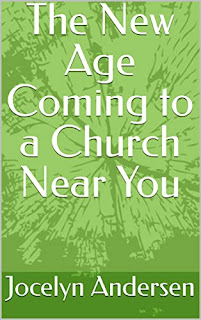
 The book has been released!  

The New Age Coming to a Church Near You: Andersen, Jocelyn: 9798768047900: Amazon.com: Books

To receive an announcement from Amazon whenever a new book is released by Jocelyn Andersen, subscribe to Her Amazon author's page.

To receive Jocelyn's newsletters, subscribe HERE.

Ancient Beginnings of Contemplative Prayer


New Age Christianity Part Three

 Start at the beginning. Read Part One 

 
Contemplative prayer traces its roots to a group of monks called the Desert Fathers. The Desert Fathers taught that it did not matter what method one used to seek God. They claimed all methods were good—regardless of origin—and they unashamedly sought and incorporated unscriptural, eastern, methods of meditation into their spiritual practices.[1 see endnotes]

   The prophet Isaiah did not agree with the Desert Fathers and warned against seeking eastern spirituality when he wrote:  

“O house of Jacob, come ye, and let us walk in the light of the LORD.
Therefore thou hast forsaken thy people the house of Jacob, because they be replenished from the east….(Isaiah 2:5-6).”

Mantra meditation is 100% New Age Eastern mysticism and has no place in the life and habits of Christians.


Modern Roots

   During the 1960’s and 1970’s, Episcopalians, Lutherans, and several non-denominational groups offered a program called Cursillo. The first Cursillo weekend in the Episcopal Church was conducted in the early 1960's with help from Roman Catholic sponsors in the Diocese of Iowa. The doctrine taught in Cursillo was traditional Catholicism.

   This was part of the ecumenical movement of which, as we will show, the eastern practice of contemplative prayer [mantra meditation] is integral.

   The United Methodist denomination was an eager participant in the Vatican plan. And in 1978, The Upper Room, which is the Spiritual Formation unit of the General Board of Discipleship of the United Methodist Church, adapted the Catholic program for a primarily Protestant audience and began to offer it under the name, “The Upper Room Cursillo.” The name was later changed to the more ecumenical, “Upper Room Walk to Emmaus [2].

      Scripture commands us to not only meditate upon something, the Written Word of God [3], but to also refrain from adopting the spiritual practices of unbelievers [4]. Jesus clearly spoke against mantra meditation when he said, “But when you pray, use not vain repetitions, as the heathen do…”

   Contemplative prayer is derived from Hinduism. Christian contemplatives do not deny this. It is diabolically opposed to the scriptural form of meditation as described in Psalms chapter one verse two.

   There is little argument that spiritual formation programs and contemplative prayer, in one form or another, go hand in hand. Spiritual disciplines, taught in spiritual formation programs, are not limited to mantra meditation but also include yoga and labyrinth walking. Just because a local congregation may not, as yet, be familiar with these terms or practices is no reason to assume that the congregation or denomination has not been affected by spiritual formation.

   The list of denominations which have instituted these programs in their theological seminaries and churches is extensive. Below are just a few schools with spiritual formation programs. The list includes every major denomination:


  • Andover Newton Theological School
  • Assemblies of God (AG Theological Seminary)
  • Baptist (Baylor University & Dallas Theological Seminary)
  • Church of God (Mount Paran)
  • Methodist (Dubuque Theological Seminary)
  • Moody Bible Institute
  • Nazarene Theological Seminaries
  • Presbyterian Theological Seminaries
  • Wheaton College


   This is just a partial list, fractional compared to the total number of Bible colleges and churches that push contemplative spirituality on their students and congregations.

   This has been going on for decades. In 2008 this author was contacted by the Dean’s office at the United Methodist University of Dubuque Theological Seminary, requesting information concerning labyrinth walking.

   They had our ministry confused with a prominent Presbyterian spiritual formation outreach with a similar name. They wrote requesting permission to use a certain newsletter article in training their seminary students to facilitate labyrinth walking as part of their spiritual formation program [labyrinth walking is an occult practice, and all occult practices are forbidden to God’s people]. Below is a copy of that correspondence:

The University of Dubuque Theological Seminary located in Dubuque, Iowa would like copyright permission to reproduce "Labyrinth" from the summer 2000, Vol. 8, No. 2 edition of Hungry Hearts.

The purpose is for use in our Spiritual Formation Group class. We are seeking permission to use as part of our curriculum for several years. Is there a one-time copyright fee that would cover us for several years? We have approx. 30-40 students in the class per year.

Thank you for your assistance.”

   Herein lies the danger of contemplative spirituality (or any spiritual practice forbidden by the Bible): All who embrace contemplative spirituality, at some point, experience an ecumenical paradigm shift where an idea forms that God is in everyone and everything.   

   This is called panentheism.

   The doctrine of panentheism is in direct conflict with the word of God, which teaches that God indwells only those who belong to him through faith in his risen son, Jesus the only Christ. Only those who have been born again through the Spirit of God can be called the children of God [5].

   All humans are not children of God.

   Once panentheism takes hold, basic Christian beliefs, such as searching the scriptures to prove all things, begin to take a back seat to experiential Christianity. Examples will be given to illustrate this. To the committed contemplative, beliefs such as the authority of the Bible and the importance of preaching the gospel in soul winning become signs that a Christian is merely religious rather than spiritual.

   Contemplative spirituality is an experiential spirituality. Best-selling contemplative author and pastor, John Piper, writes that if we don’t feel our faith we may not be saved. He advocates emotion and the experiential in refuting the clear scriptural teaching of faith and assurance contained in Romans 10:9-13 and 1 John 5:11-13.[6]

   Piper is wrong.

 The Written Word of God assures us that if we call on the name of the Lord to be saved, then we will be saved and that His Word assures us of eternal life if we have the Son (if we are born again).

   That is faith.

   Faith is often felt but not always.  

    Former Sunday school worker/now contemplative author, Sue Monk Kidd, is an example of what happens when faith in the written Word of God is rejected in favor of experiential Christianity. Within the familiar confines of her Baptist Church, she came to the unfortunate conclusion that her ultimate spiritual authority was not the Bible at all, but rather the “divine voice of her own soul.”[7]  

   How can Christians listen to this woman when the Word of God tells us just the opposite [8]? Kidd now boasts that she has moved past the traditional to the sacred “feminine.”

With unscriptural concepts such as those promoted by Piper and Kidd going largely unchallenged within the Body of Christ [9]. it is becoming increasingly easier for unsaved persons to obtain church membership and lead active “Christian” lives, when no saving conversion has ever taken place.

   Bill Hamon, called the Father of The Prophetic movement, promotes contemplative spirituality and viciously attacks biblical beliefs and practices in just about every area.

   Hamon had this to say about the amazing fact that 20,000 new believers per day were being won to Jesus in China, he wrote, “…that sounds great, but…. [10]."  

   How can anyone who is truly born again add a “but” to the fact that 20,000 people a day in any single country are being saved from the Lake of Fire?

   Bill Hamon does it because he claims that signs and wonders are the primary proof that God is validating his ministry and that these are the definitive fruits of God’s blessing on any ministry. In his view, the fact that souls may be won to Christ is merely collateral blessing, of secondary importance to the manifestation of signs and wonders.

   Experiences, signs, wonders, and our own inner voices do not supersede the authority of the written word of God and the amazing miracle of the salvation of a soul.

   Rick Joyner is another prophetic leader who promotes contemplative prayer and emphasizes the experiential in place of the authority of the Bible.

   Joyner claimed he had lots of scripture to back up the things he wrote in his anti-Bible, anti-soul-winning, book, The Harvest, but that he was not going to use much of it as he wanted his readers to “commune with the spirit” about whether what he had written was true.

   One wonders what spirit Joyner communes with, that objects to scripture being used as a standard for truth or that denigrates the practice of soul-winning.

   Jesus was not ashamed of the written Word of God. He boldly proclaimed, “It is written!” when Satan attempted to commune with him concerning “truth.”

   The Bible clearly states that “They that win souls are wise.”

   Who will we believe, those who denigrate soul winning, or the Bible?

   In a later book, Joyner shared a vision he received where he saw a holy mountain. On this mountain, Christians who focused primarily on soul winning were portrayed as being at the bottom of the developmental heap. According to Joyner, his vision of the “holy mountain” showed him that ardent soul winners are the least spiritually developed and most pathetic of all Christians [11].

   Here lies the crux of the whole matter, all who embrace experiential spirituality, sooner or later, begin losing respect for the written word of God. And their burden for soul-winning is often superseded by a zeal for promoting contemplative spirituality instead.

   Aggressive evangelism by preaching the gospel becomes discouraged, even ridiculed. Bible believing Christians with the ministry gift of evangelism and ardently preach the gospel in soul-winning are often libeled as being “judgmental” and called Pharisees. Relationship or prophetic evangelism is encouraged to replace it. That may sound good on the surface, and of course there is a place for relationship evangelism, but wholly rejecting the one in favor of exclusively embracing the other denies the biblical fact that it is the gospel of Jesus Christ—both written and spoken—that is the power of God unto salvation [12].

   No church fellowship is immune to the influence of contemplative spirituality.

   Spiritual Formation programs are taking root within every denomination and belief system of Christianity. Southern Baptist Life Way Bookstores has been confronted by concerned Christians about their promotion of contemplative books and authors who promote contemplative spirituality [13].

   Although contemplative spirituality is obviously rooted in pagan religious systems, such as Hinduism, the modern-day contemplative movement, promoted within Protestant Christianity through spiritual formation programs, descends directly from Roman Catholic mystics who adopted it directly from non-Christian eastern mystics [14].  

   It is commonly acknowledged among contemplative leaders that contemplative prayer cannot be fully embraced without referencing, at some point, the Roman Catholic mystics. Madame Guyon, Saint Teresa of Avila, Saint Ignatius, Saint Bernard of Clairvaux, and the Desert Fathers are just a few of these. However, this fact may not be revealed—at first—while introducing spiritual disciplines to non-Catholic believers.[15]

   Mike Bickle, a leader in the prophetic movement who heavily promotes contemplative prayer, boldly proclaims that if you want to go “deeper into God,” you must embrace both contemplative prayer and the Roman Catholic mystics [16].

   Bickle unashamedly admits that contemplative prayer cannot be found in scripture nor can it be found anywhere in protestant tradition. It can only be found within eastern religions (Hinduism and Buddhism) which passed it on to Christianity via the Roman Catholic mystics.

   Most leading contemplatives have no problem agreeing with Mike Bickle on this.

  Some (but by no means all) descriptive terms used by those who promote contemplative spirituality are:

  • Going deeper into God
  • Experiencing the presence of God
  • Meditation
  • The Silence
  • Soaking Prayer
  • Soaking
  • Quiet
  • Being “Quiet” before God
  • Solitude
  • Reflecting / Reflection
  • Lectio Divina
  • Spiritual disciplines
  • The Secret Place


   As stated, one of the fruits of contemplative spirituality is an ecumenical mindset which fails to discern between who is a child of God and who is not, this extends to important doctrinal differences between Protestant and Roman Catholic beliefs and practices.

   The differences begin with how a person is saved.

   Roman Catholicism teaches that a person is fully incorporated into the Body of Christ when they participate in their first mass, at the time of their first communion [17]. personal faith, being born again, and calling on the name of the Lord for salvation plays no part in the Roman Catholic belief system. According to the documents of the Vatican II, no one is born again, and there is no assurance of salvation for any believer.

   Belief in the sacraments of the Church and in the Priest’s authority to administer them is paramount.

   Can such a doctrine be found anywhere in scripture?

   Nevertheless, all Christians who experience paradigm shifts by means of contemplative “spiritual disciplines” become enamored with both eastern culture and Roman Catholic mystics.

   Despite the ecumenical nature of their rhetoric with regards to Protestants and Catholics, the contemplative Christian’s love affair with eastern spirituality, almost without exception, eventually finds expression in words and writings that are polarizing within the protestant camp, peppered as they are with frequent references to the un-spirituality of the “western” church.

   Unity, peace, love, and “Don’t Judge!” are words of the day. “Judgmental” is one of the most frequently used words in the modern spiritual vocabulary (towards Bible believing Christians) with “Pharisee” running a close second. But those whose conversation is so liberally sprinkled with the words unity, peace, love, and don’t judge, seem to have no problem with criticizing and judging—often viciously—those with more “traditional” beliefs.

   They are hypocrites who do not practice what they preach.

   What kind of fruit is that? Jesus said, “You shall know them by their fruits…”

   The process takes time, but eventually all committed contemplatives experience a failure to understand why there are religious differences… at all… between anyone… in any religion.

   A widely publicized 2007 document entitled, “A Common Word Between Us and You,” is supported by Rick Warren and many other prominent Christian leaders. The document calls for a common understanding between the Christian faith and the Muslim faith based on the Quran commandment “O People of the Scripture! Come to a common word as between us and you: that we worship none but God.”

   Prominent Christian leaders, in a show of solidarity with Muslim leaders, signed their names to that document, despite the fact that the Christian scriptures and the Muslim Koran are not the same and are indeed incompatible with one another. The Christian God and the Muslim Allah are not even the same God. Ask any Muslim and they will tell you that Allah and Yahweh are not the same God. Ask any Muslim and they will tell you that Allah, the moon god of Mecca, has no son.

   Rick Warren subtly promotes, among other questionable things, contemplative spirituality. His book, The Purpose Driven Life, is full of eastern thought.[18] So it should come as no surprise that he would be listed as a signatory of such a nefarious document as, “A Common Word Between Us and You.”

   When contemplatives say, “Seek God. It does not matter how you do it—just do it—he will accept you regardless,” they really mean to start seeking a trance-like state of mindlessness only achieved through mantra meditation.   

   It does not matter how we seek God? That is not what the Bible says. We are instructed in scripture to seek God according to His methods which are outlined clearly in His Word. Jesus Christ, the Jesus of the Bible, is the only way, the only truth and the only life [19].

   Far too many have fallen in love with another Jesus. A Jesus they will find out—unfortunately when it is too late—who cannot save [20].

   When unscriptural spiritual disciplines are adopted, and the biblical doctrine that God only indwells those who are saved by faith in the shed blood of Jesus begins to be replaced with the false notion that God is in everything and everyone, the very word doctrine (which simply means teaching or instruction) eventually becomes a dirty word with the superior truth of scripture becoming subordinate to deceitful human feelings [21].

   The experiential aspect of contemplative prayer means that during the course of practicing this spiritual discipline the person experiences something.

   That is the whole purpose of it, to experience something.

   It is sometimes called “Experiencing God” or “Experiencing the Presence of God.”

   Only it is not the God of Heaven, the creator of Heaven and earth, who is experienced.

   The God of the Bible does not operate that way. His presence cannot be conjured using any ritual or meditative practice.

   Contemplative prayer is dangerous.

   In his book, Prayer: Finding the Heart’s True Home, Richard Foster warns his readers that they may receive guidance during contemplative prayer that is not divine guidance. He warns that the person entering into such meditation may not be safe from “dark and evil” spirits.

   Yet he encourages the pursuit of it anyway.

   Brian Flynn, a former New Age medium who now exposes new age practices within the church, suggests that Christians pursue this unscriptural, dangerous, form of meditation, because they become infatuated with the seductive feeling that accompanies it. While introducing the subject to potential victims, Mike Bickle strongly emphasizes the experience contemplative prayer produces.

   A few well-known authors who are now promoting contemplative spirituality are [22]:

  • Beth Moore
  • Bill Hamon
  • Brennen Manning
  • Chuck Swindoll
  • C. Scott Peck
  • David Jeremiah
  • Father Thomas Keating
  • Henri Nouwen
  • Max Lucado
  • Nancy Leigh DeMoss [if not overtly teaching the spirituality herself, is allowing the concepts to be taught by others on her website. This is a favored method used by those who know a doctrine is controversial but want to keep their own noses clean]
  • Richard Foster
  • Rick Joyner
  • Rick Warren
  • Sue Monk Kidd
  • Thomas Merton


   This is a comparatively short list that highlights the pervasiveness of this movement and the diversity of religious affiliations and backgrounds of those who promote contemplative spirituality. Virtually all Bible colleges and seminaries now have Spiritual Formation departments.

   It is a frightening fact that the list of former evangelical/now contemplative authors is growing daily.

   The dangers of contemplative, experiential, spirituality are strong enough that Bible believing Christians should give anyone promoting these beliefs a very wide berth, no matter how biblical their doctrine has been in the past.

   When allowed to run its course, the end result of embracing contemplative spirituality is a complete paradigm shift, not only away from the simplicity found in Christ, but altogether away from the fact that Jesus Christ, the Jesus of the Bible, is the only way, the only truth, and the only life.  

   To a man, all evangelical contemplatives profess belief in Christ, despite the fact that he condemns their heathenistic practices in no uncertain terms when he forbids vain repetitions in prayer.  

   All prominent contemplatives, all, as in every…   single…   one… are panentheists who claim to have finally come to the understanding that God is in all things.

   Where in scriptures is such a thing even hinted at, that God is in all things as opposed to the Biblical teaching that he resides, not in all things, but only within those who belong to him through faith in Jesus, his risen son  [23]?

   This is an admission, whether they own up to it or not, that in their revised contemplative opinion, Jesus is no longer the only way to eternal life.

   There is no way God can be in everything and only in those who belong to his risen Son at the same time. The two ideas are mutually exclusive and in opposition to each other. The evidence is overwhelming that the end result of contemplative spirituality is Panentheism.

   What kind of fruit is this? Jesus said, “You shall know them by their fruits…”


[1] A good research site for concerning eastern meditation practices in The Church is Lighthouse Trails Research Project: http://www.lighthousetrailsresearch.com/

[2] Participants in the Walk to Emmaus retreats and Chrysalis Walks (Chrysalis Walk is the youth version of Walk to Emmaus) are introduced to the concept of the Fourth Day. Fourth Day living includes follow-up with ongoing small group get-togethers and resources that Upper Room Spiritual Directors hope will continue to provide “spiritual guidance and nurture” to Chrysalis and Walk to Emmaus initiates. Recommended follow-up resources include authors who are Roman Catholic mystics such as St. Teresa of Avila and the Desert Fathers (known as the Fathers of Contemplative Prayer). Books by Evelyn Underhill are also recommended as nurturing and guiding resources. Underhill was an Anglican mystic who believed that mysticism (meditation/contemplative prayer also known as “The Silence”) was the vehicle in which all religions could come into contact with the "Absolute" (God) however one perceived him to be—clearly not a concept found in scripture nor compatible with the exclusive gospel of Jesus Christ as the only way to the Father and to eternal life.

[3] Psalm 1:2

[4] Jeremiah 10:2 Thus saith the LORD, Learn not the way of the heathen….

[5] John 1:12

[6] John 1:11-15 And this is the record that God has given to us eternal life and this life is in his Son they that have the Son have life and they that have not the Son of God have not life These things have I written to you that believe on the name of the Son of God that you may know that you have eternal life and that you may believe on the name of the Son of God And this is the confidence that we have in him that if we ask any thing according to his will he hears us And if we know that he hears us whatsoever we ask we know that we have the petitions that we desired of him

[7] Dance of the Dissident Daughter, 1996

[8] Jeremiah 10:23: O LORD I know that the way of humanity is not in themselves it is not in mortals that walk to direct their steps

[9] Piper and Kidd’s books are heavily promoted in mainstream Christian bookstores and are often recommended reading in previously Bible believing churches.

[10] Apostles Prophets and the Coming Moves of God, 1997

[11] The Final Quest, 1996

[12] Romans 1:16

[13] http://www.lighthousetrailsresearch.com/newsletter100906.htm#article2

[14] Everywhere we look “evangelicals” are turning to Roman Catholic styles of contemplative spirituality (which in many cases were borrowed from pagan sources), such as ritualistic rote prayers, chanting, meditation, centering prayer, the use of prayer beads, Stations of the Cross, lectio divina, labyrinths, and “the daily office.”

http://www.wayoflife.org/index_files/evangelicals_turning_to_roman_catholic_spirituality.html

[15] “You’re going to have to open your heart to Teresa of Avila…,” Mike Bickle, Contemplative Prayer, 2001

[16] The Protestant church must become students of contemplative prayer, and to do that, you have to go across that great, horrible divide, and you have to drink from Catholic history. Mike Bickle, Contemplative Prayer, 2001

[17] Documents of the Vatican 2, New Revised Edition, pg. 112, William B. Eerdmans Publishing Company, 1984

[18] The Hindu concept of Karma is present among other things in, “The Purpose Driven Life.” Warren weaves pagan/New Age ideas throughout his book, and he does so in such a subtle manner, that unless one is familiar with the belief systems, they would likely (and did!) go un-noticed by the average reader.

[19] John 14:6

[20] 2 Corinthians 11:3-4

[21] There is a way that seems right unto a man but the end thereof are the ways of death,  Proverbs 14:12

[22] For an extensive listing of contemplative authors and seminaries visit Lighthouse Trails Research Project online

[23] “Here lies the core of panentheism: God is in everything, and everything is in God. The only difference between pantheism and panentheism is how God is in everything. This position of the panentheist is challenging to understand: Your outer personality is not God, but God is still in you as your true identity…” Ray Yungen, A Time of Departing, Lighthouse Trails Publishing Company, Silverton, OR, 2006

Read Part Four HERE

Or get the book HERE


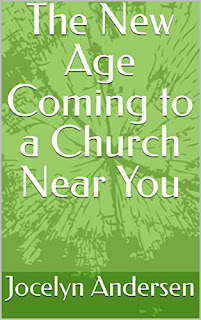
The book has been released!  

The New Age Coming to a Church Near You: Andersen, Jocelyn: 9798768047900: Amazon.com: Books

To receive an announcement from Amazon whenever a new book is released by Jocelyn Andersen, subscribe to Her Amazon author's page.

To receive Jocelyn's newsletters, subscribe HERE.